Job seekers are the easiest targets for scammers — not because they are naive, but because they are in a hurry. Scammers know this, so they build every ad around an offer that is hard to refuse: high salary, flexible hours, guaranteed work visa, immediate start.
The cost may be a fee "to secure the position," or something worse: a copy of your passport and your banking details.
The good news is that fake job ads repeat the same patterns almost every time. Once you learn to read those patterns, you will spot one in under two minutes. This guide shows you how.
The First Golden Rule
A real job pays you. You do not pay it.
Anyone asking you for money — for hiring, for reserving a seat, for "administrative fees," for a visa, for mandatory training, or for a pre-employment medical — is running a scam until proven otherwise. Close the conversation.
Serious companies absorb their own recruitment costs. The employer pays to advertise the role; the applicant does not.
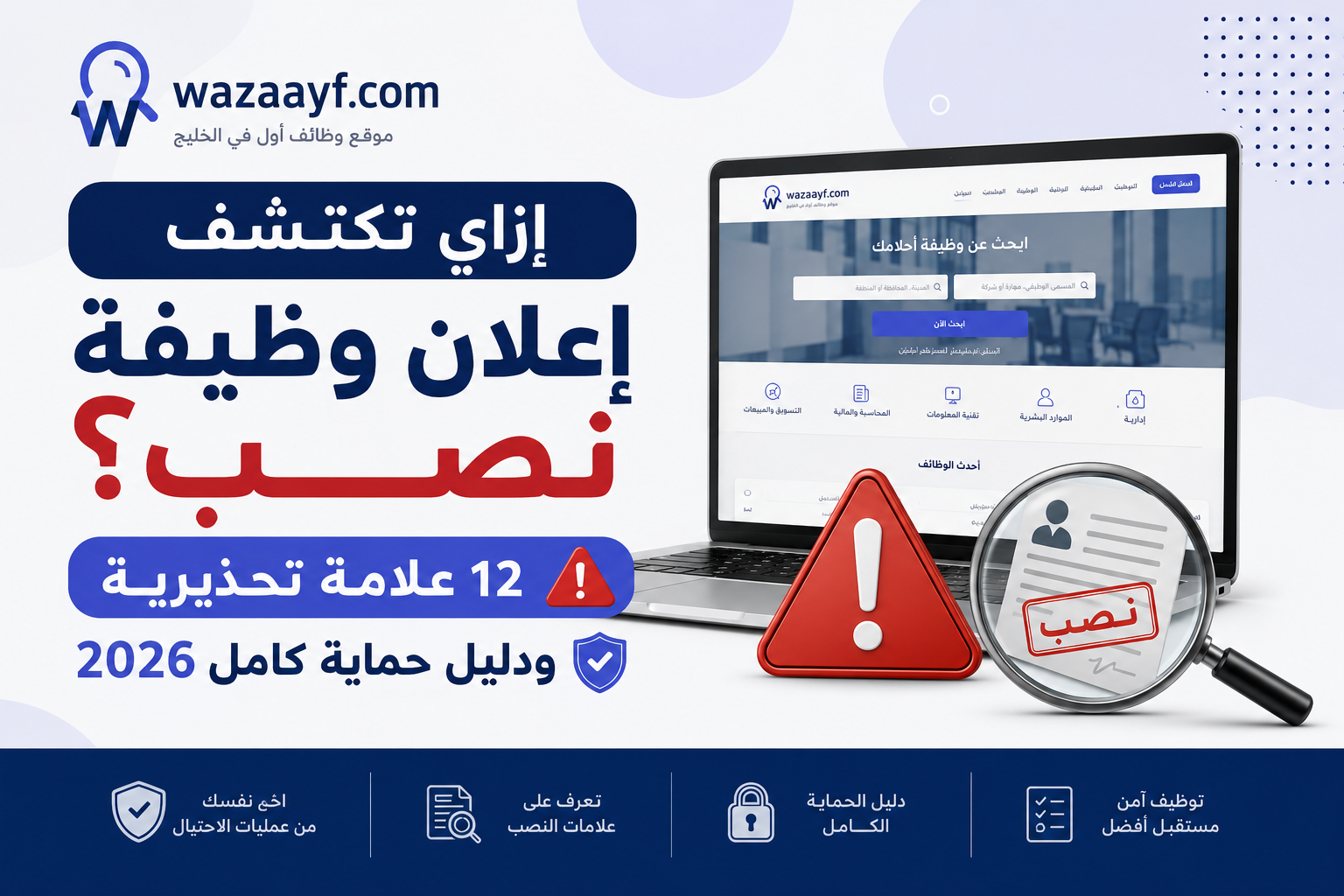
12 Red Flags in a Job Ad
1) Any request for money
Under any label: registration fees, a good-faith deposit, visa fees, insurance, or buying a "qualifying course."
2) A salary that doesn't match the task
"Data entry clerk — 12,000 SAR per month — work from home — no experience required." Ask yourself: why would a company pay that for work anyone can do?
3) A non-corporate email address
A major company writing to you from hr.company2026@gmail.com? Real companies use their own domain: name@companyname.com.
4) Instant acceptance with no interview
"You're hired! Send your details and start tomorrow." No company hires a person it has never interviewed.
5) All communication happens on WhatsApp or Telegram
Especially from an unfamiliar international number, with no call and no video meeting.
6) Poor grammar and spelling errors
A credible company's HR department does not send out an ad riddled with mistakes.
7) Artificial time pressure
"Only 3 seats left." "Reply within the hour or your offer is cancelled." Urgency is a scammer's primary weapon — it stops you from thinking and verifying.
8) Requests for sensitive data early
Bank account number, an OTP code, both sides of your ID, or a credit card number — before any signed contract and before your first day.
9) A vague job description
"Great income opportunity, all specialisations welcome." No title, no duties, no requirements. That is not a job ad; it is a fishing net.
10) A company with no digital footprint
No website, no LinkedIn page, no address — or a website registered a few weeks ago.
11) Requests to move or receive money
"Receive the amount in your account and transfer it to..." This is not a job — it is money laundering, and you are the front.
12) A job offer for a role you never applied to
A message telling you that you have been "accepted" for a position you never sent an application for.
Practical rule: one red flag = stop and verify. Two or more = walk away immediately.
The 5 Most Common Recruitment Scams
| Type | How it works | What they want |
|---|---|---|
| Visa fee scam | "Gulf job — transfer the visa and ticket fees" | Money, then they vanish |
| Fake remote job | "Daily income from home — just activate your account" | Activation fees + your data |
| Identity theft | A fake interview, then "send documents for the contract" | Passport + ID + bank details |
| Money laundering | "Collections agent" or "payments manager" | Your bank account as a conduit |
| Disguised MLM | A "sales job" that turns out to be recruiting | You buy a product and recruit friends |
How to Verify a Company Before You Send Anything (5 Minutes)
- Search the company name plus "scam" on Google. Previous victims usually leave a warning.
- Check the website's domain age. A one-month-old site for a company claiming 20 years of experience is a warning.
- Check LinkedIn. Does the company have a page? Does it have real employees with older, active profiles?
- Call the company using the number on its official website — never the number in the message — and ask whether the vacancy is genuine.
- Verify its commercial registration with the official authority in your country (for example, the Ministry of Commerce in Saudi Arabia).
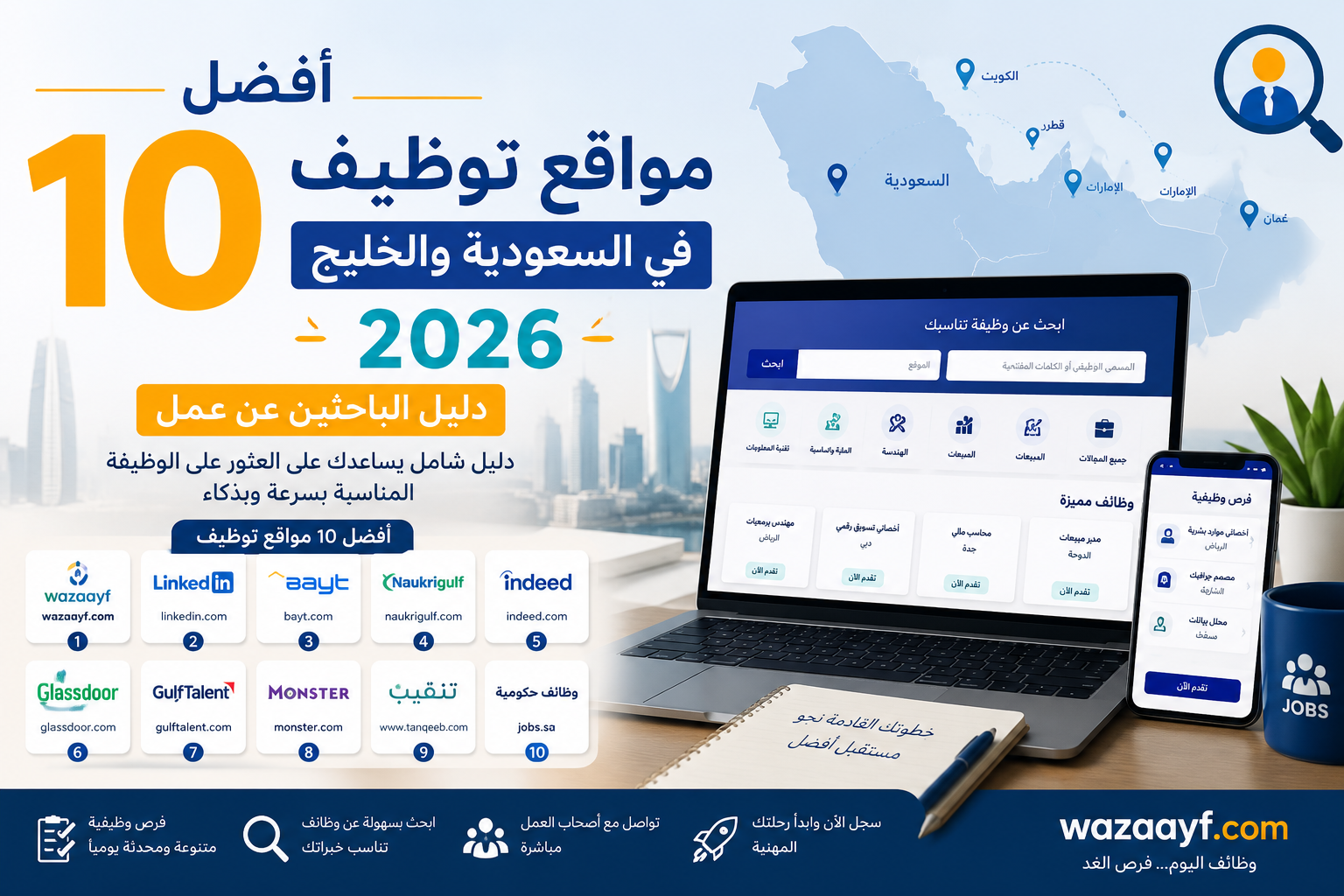
💡 Extra tip: always apply through established job platforms that review listings before publishing them. Browse the latest jobs on Wazaayf.com, or read our guide to the best job sites in Saudi Arabia and the Gulf.
Be Especially Careful With Gulf and Overseas Jobs
This is a scammer's favourite territory, because the victim is far away and cannot visit the office.
- Fake recruitment agencies impersonate the names of real companies.
- You do not pay for the visa. Under most Gulf labour systems, the cost of bringing in a worker falls on the employer.
- The contract is signed before travel, and must state the job title, salary, working hours, accommodation, and flight.
- Confirm the agency is licensed with the official authority in your country before dealing with it.
If you are looking for opportunities abroad, start from trusted sources such as our international jobs page rather than messages arriving on WhatsApp.
I Was Scammed — What Should I Do Now?
Act fast, and don't be embarrassed. The scammer is to blame, not you.
- Stop any transfer immediately. Call your bank and report fraud; some transfers can be halted within hours.
- Change your passwords on every account using the same email or number, and turn on two-factor authentication.
- If you sent identity documents, notify the issuing authority, ask for restrictions on their use, and monitor for activity in your name.
- Report it to the authorities:
- Saudi Arabia: the official cybercrime reporting channels.
- Egypt: the General Department of Information Technology (internet crime police).
- UAE: the local police cybercrime reporting platforms.
- In any country: search for "report cybercrime + your country" and use an official government source.
- Report the listing to the platform where it appeared — this protects others.
- Keep all evidence: screenshots, messages, transfer receipts, phone numbers.
⚠️ Note: official reporting channels can change. Always verify through your government's official website, and never use a link sent to you in a message.
Frequently Asked Questions
Is it normal to pay a recruitment agency a fee? In most Gulf countries, recruitment costs are the employer's responsibility. Any direct request for money from an applicant should raise suspicion and be checked with the authority that licenses the agency.
I only sent my CV — am I at risk? The risk is usually limited, but your CV contains your phone and email and may be used in later phishing attempts. Never put your national ID number or full home address on your CV.
The company is well known and the ad looks official — can I relax? Impersonating large companies is a common tactic. Always verify the email domain, and confirm the role is listed on the company's official careers page.
They asked for a small medical exam fee before hiring. Is that normal? Medical exams are a genuine step in some contracts, but they take place at an approved centre designated by the official authority after a contract is issued — never by transferring money to an individual on WhatsApp.
Are all remote jobs suspicious? Not at all. Remote work is real and widespread. What is suspicious is any offer promising high income for almost no effort, or asking for activation fees.
Conclusion
Job scams succeed not because they are clever, but because they catch someone in a rush. Make your rules non-negotiable:
- Never pay for a job.
- Never send your passport or banking details before a signed contract.
- Always verify the company through its official channels, not the link sent to you.
- Urgency is a warning, not an opportunity.
Then apply with confidence through trusted sources. Browse the latest available jobs on Wazaayf.com, and prepare your application with our guides on writing a professional CV and writing a cover letter — because the best protection against a scam is being ready for a real opportunity.