How to Find an Investor for Your Small Business: A Practical Guide
 Wazaayf.com editorial team
2 min read
9
In this article
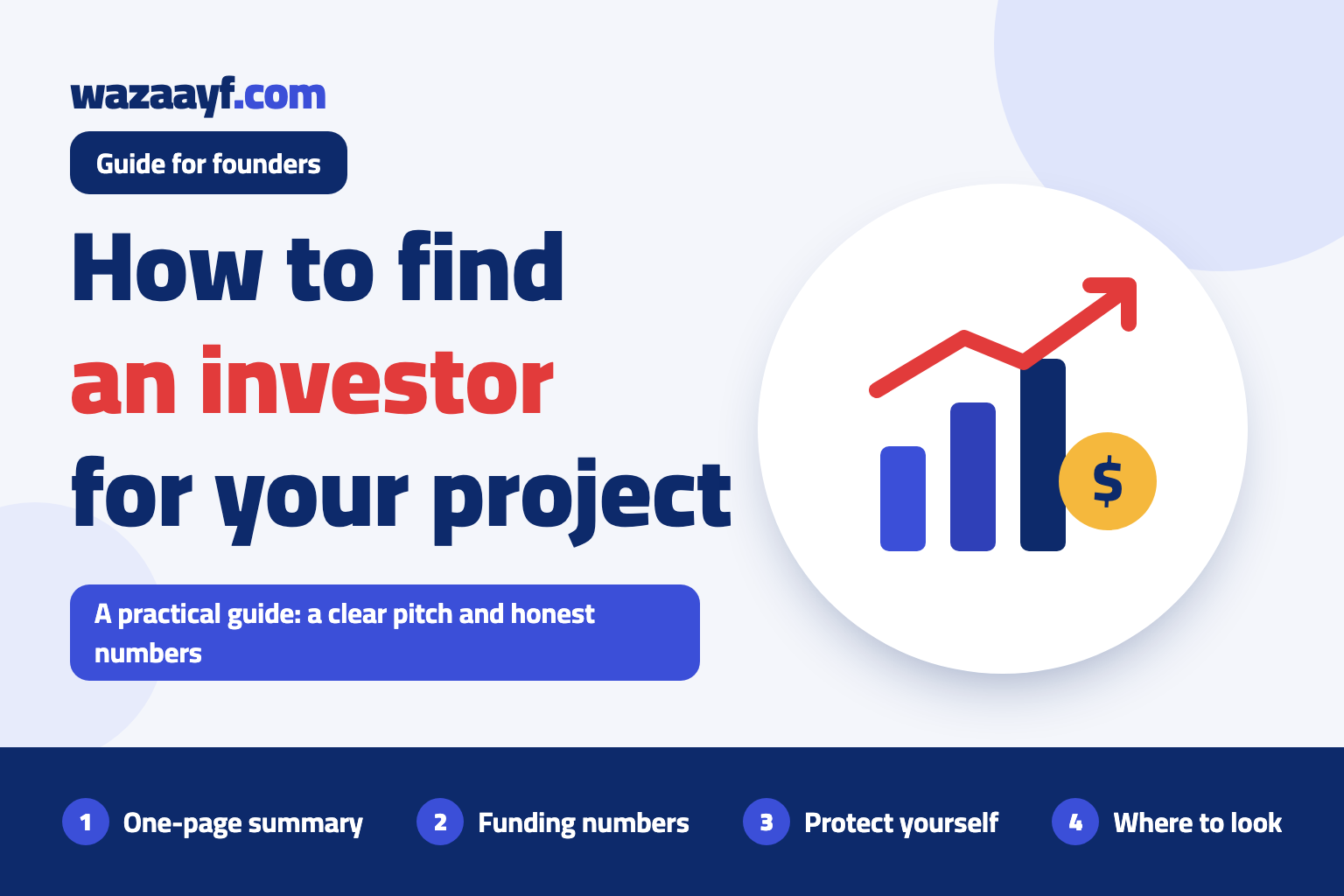
Many people with good ideas lose years because they don't know where to start looking for funding. A serious investor is not hunting for a dazzling idea so much as a project with clear numbers and a founder who knows what they want. This guide shortens the road.
First: why investors turn down most pitches
The idea itself is rarely the reason. The common ones are:
- A vague pitch: it doesn't say how much money the project needs or where it will be spent.
- No numbers: no costs, no expected revenue, no break-even point.
- A founder with no skin in the game: no time, money or experience contributed.
- An inflated valuation: a project with no sales priced like a successful company.
Second: prepare a one-page summary
Before you talk to any investor, write a short summary that answers these questions:
- What problem does your project solve, and for whom?
- How does it make money? (product sales, subscriptions, commission, services...)
- Exactly how much funding do you need, and what will it be spent on?
- What have you achieved so far? (customers, trials, a website, stock...)
- What are the main risks, and how will you handle them?
- What are you contributing, and what deal are you offering the investor?
Being honest about risks raises an investor's trust rather than lowering it. An investor who discovers a risk you hid will not continue with you.
Third: know the kind of partnership you want
- An equity partner: pays money in exchange for a share of the business and its profits.
- Funding with a fixed return: repaid over an agreed period.
- A partner with expertise: someone who adds contacts or operations alongside the money.
Choose what fits your stage. A project that hasn't started selling yet can hardly carry fixed repayments from the first month.
Fourth: protect yourself before signing
- Put the whole agreement in writing: shares, duration, decision powers, and what happens on a loss or an exit.
- Don't pay a "facilitation fee" to any middleman before the investor proves they are serious.
- Verify the other party's identity and track record, and have the agreement legally documented.
- Don't hand over the project's secrets before a non-disclosure agreement where needed.
Fifth: where to look
Your close circle (friends and contacts in your field) is still the quickest start. Beside it, there are platforms that bring project owners and investors together in one place, such as Wasit Invest, where you publish your project with its details, investors browse it and send expressions of interest, and you save the time of finding them one by one. Whatever the channel, rely on a clear pitch and honest numbers.
In short
Prepare a one-page summary, know the kind of partnership you want, watch the terms of the agreement, and look in more than one channel. Most first rejections are normal: ask for the reasons and improve your pitch before the next attempt.